
Are you building real customer relationships or losing revenue every single day without even realizing it?
In 2026, CRM experience decides who grows and who falls behind. When sales, communication, and invoicing run inside one CRM system, growth stops being random and starts being predictable.
Key Takeaways
- Better CRM experience drives higher revenue.
- CRM and customer experience (CX) must run inside one connected system.
- Automation, AI, and personalization directly increase retention and sales.
- Simplicity and strong UX drive real team adoption.
- The right CRM becomes your growth engine, not just a database.
What is CRM experience?
CRM experience means managing and personalizing your entire customer journey inside one modern business software. It connects CRM and customer experience so every interaction is relevant, consistent, and designed to drive long-term growth.
This matters more than ever, as 86% of buyers say they are willing to pay more for a better customer experience, making customer relationships a direct driver of revenue.
What Is CRM Customer Experience Management?
Customer experience management (CXM) is the difference between hoping customers stay and making sure they do.
With unified data, automation, and AI working together, your CRM predicts, personalizes, and triggers actions automatically. Every touchpoint becomes intentional, not accidental.
How does CRM improve customer experience?
The difference between average service and scalable growth lies in how your CRM experience works behind the scenes. When CRM and customer experience are connected inside one system, every interaction becomes faster, smarter, and more profitable.
In fact, 1 in 3 customers will leave a brand after just one bad experience, which shows how critical consistent and personalized interactions have become for modern businesses.
1. Personalization at Scale
A modern CRM experience lets you personalize communication for hundreds or even thousands of customers without adding extra work to your team.
With unified customer data, your CRM software experience adjusts offers, follow-ups, and messages based on real behavior. Customer personalization means communication feels relevant and timely, so customers respond faster, stay longer, and buy more often.
2. Omnichannel Communication
Disconnected tools create fragmented customer experiences.
When your CRM system experience centralizes communication across email, phone, and chat, every conversation has context. Customers never repeat themselves, your team responds with clarity, and trust builds naturally.
3. Faster Support & Issue Resolution
Every minute of waiting weakens customer trust. A connected CRM experience changes the pace completely:
- Full customer history in one place. Your team immediately understands the context.
- Emails, invoices, and previous notes are visible without switching tools.
- Automatic ticket assignment so requests reach the right person instantly. No internal forwarding chaos.
- Clear task tracking that prevents forgotten issues.
- Real-time access to data inside your CRM system, which means faster answers and fewer escalations.
Fast support does not happen by accident. It starts with the right CRM implementation.
4. Predictive Insights & AI Automation
Modern CRM experience is powered by data, not assumptions. With AI-powered CRM automation, your system acts before problems appear:
- AI scores leads based on real behavior
- Automation sends follow-ups without manual input
- Predictive alerts identify churn risks early
- Smart dashboards reveal hidden revenue opportunities
5. Better Sales Follow-Ups
Think about how many open deals are sitting in your pipeline right now. No reply. No reminder. No next step.
The right system turns follow-ups into a clear process instead of a risky memory game. Tasks are created automatically. Emails are triggered based on behavior. The next action is always clear.
- Automated reminders for every stage
- Follow-ups triggered by real activity
- Clear ownership of every deal
CRM and Customer Experience – What’s the Connection?
CRM and customer experience work as one system inside a modern ERP platform. Your CRM collects the data. Customer experience turns that data into meaningful action.
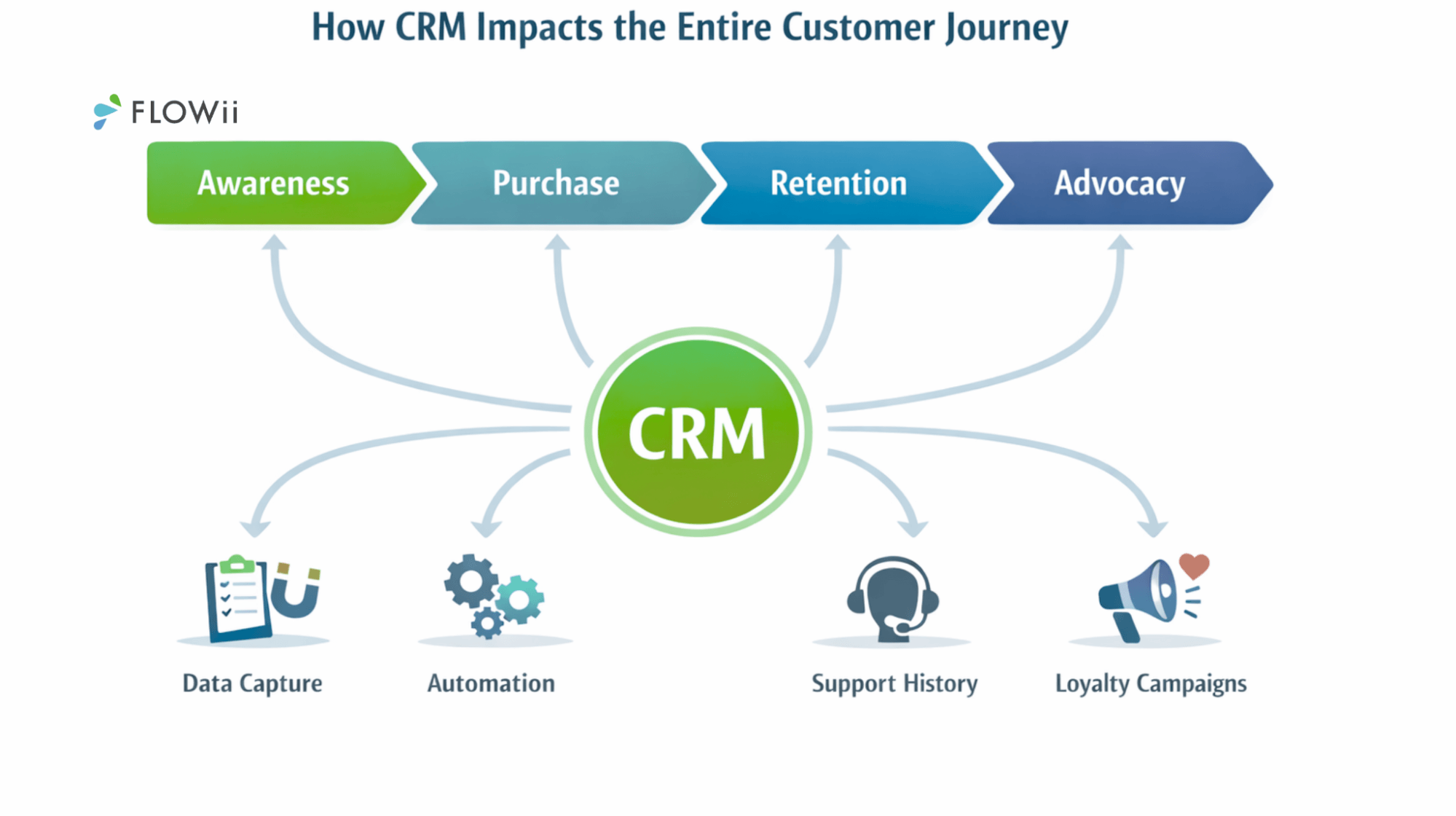
How CRM Impacts the Entire Customer Journey
A strong CRM experience supports every stage:
- Awareness → Lead capture and smart segmentation
- Purchase → Structured pipeline and automated follow-ups
- Retention → Timely communication and full support history
- Advocacy → Loyalty campaigns and repeat purchases
When CRM and customer experience are aligned, customers move naturally from first contact to long term loyalty.
Customer Experience Platform vs CRM system – What’s the Difference?
A CRM system manages sales, customer data, and daily communication.
A Customer Experience Platform focuses on digital journeys and marketing automation across channels.
For most SMBs, a modern CRM already covers key customer experience management in CRM without extra complexity. In growing companies, complexity kills momentum faster than lack of features.
| CRM System | Customer Experience Platform |
| Sales & pipeline management | Digital journey orchestration |
| Customer data & history | Behavioral tracking |
| Sales automation | Marketing automation |
| Ideal for growing SMBs | Ideal for large enterprises |
CRM Experience Examples (Real Use Cases)
Instead of theory, let’s look at the results. These four real case studies show how CRM and customer experience translate into measurable business growth.
Example 1: E-commerce Personalization
More traffic will not fix low conversions. Smarter personalization will.
When your e-commerce CRM tracks real customer behavior, follow-ups happen automatically:
- Timed cart reminders
- Product recommendations based on purchases
- Targeted campaigns instead of mass emails
The impact in one growing store:
- +18% repeat purchases — personalization increases repeat buying behavior
- –22% cart abandonment — triggered emails can lead to 42% of users completing their purchase after clicking the email
- +31% email conversions — triggered campaigns are proven to outperform bulk emails
Example 2: B2B Sales Pipeline Automation
A 6-person consulting company handled leads in emails and spreadsheets. Follow-ups depended on memory. Invoices were created only after someone remembered to send them.
After moving their sales process into one structured CRM pipeline:
- Every new inquiry instantly created a deal with clear ownership
- Follow-ups were triggered automatically at each stage
- When a deal was marked as won, an invoice draft was generated automatically
Within 3 months, missed follow-ups dropped by 40%, the sales cycle shortened by 16%, and managers finally had real-time visibility over the entire pipeline. Sales stopped feeling chaotic. It became controlled and predictable.
Example 3: Customer Support Ticket Automation
This is where the best small business software makes a real difference. A small service company handled support through shared inboxes and spreadsheets. Requests were missed. Customers waited. After centralizing support inside one enterprise system, everything changed:
- Every new request automatically created a tracked task
- Full customer history was visible within seconds
- No issue could be closed without proper resolution
Within weeks, response times improved by 34%, and customer satisfaction increased because nothing was lost in the process.
Example 4: CRM for Candidate Experience (HR use case)
A small recruitment agency managed candidates through emails and spreadsheets. Follow-ups were inconsistent.
After moving hiring into one CRM system:
- Automated updates were sent at each stage
- Communication was tracked in one place
- No candidate was forgotten
Before choosing the tool, they compared CRM pricing to ensure automation fit their budget.
What Does a Modern CRM Software Experience Look Like in 2026?
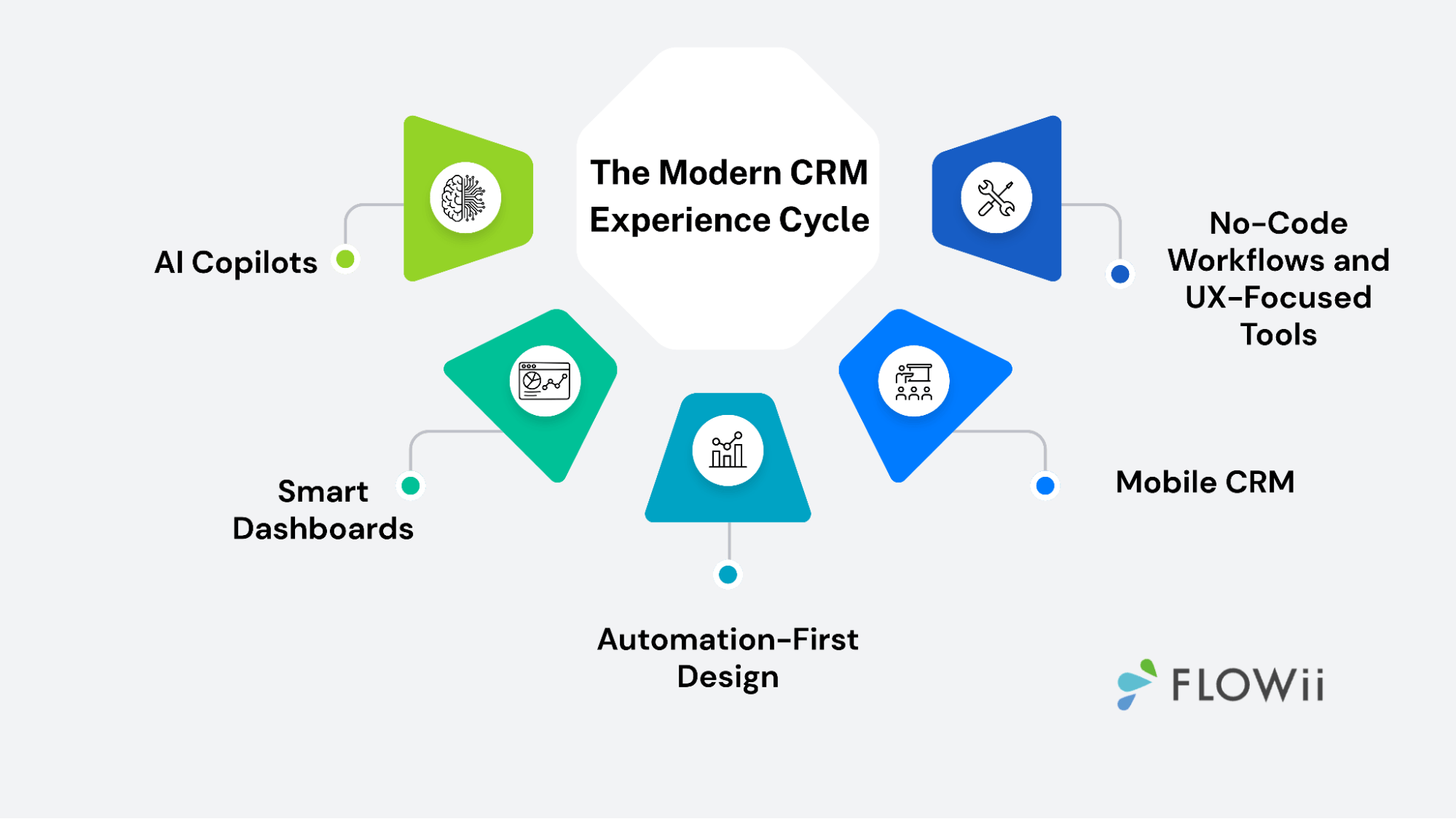
In 2026, a modern CRM software experience looks like a fully connected business system. Unified data, AI support, automation by default, and full visibility in real time.
It connects sales, projects, invoicing, tasks, and communication into one structured flow instead of scattered tools. Your team sees the next step instantly, and your business moves forward without unnecessary delays. These are the core elements that define what modern CRM software experience looks like in 2026:
-
AI Copilots
AI copilots are becoming standard in modern CRM software. They summarize meetings, suggest next best actions, and even draft follow-ups automatically. According to recent research, 78% of organizations now use AI in at least one business function, showing how widespread AI adoption has become.
Instead of wondering what to do next, your system guides you.
-
Smart Dashboards
You should not need five reports to understand your business. Smart dashboards show revenue forecasts, pipeline bottlenecks, and performance metrics instantly. One screen. Full clarity.
-
Automation-First Design
In 2026, automation is not an extra feature. It is the foundation. Deals move stages automatically. Tasks are created without reminders. Follow-ups trigger based on activity. Your pipeline keeps moving even when your team is busy.
-
Mobile CRM
Work no longer happens only at a desk. Modern mobile CRM lets you update deals after meetings, send offers on the go, and access full customer history anytime. Speed becomes a competitive advantage. The teams that move fastest are the teams that close fastest.
-
No-Code Workflows
You should be able to adjust your sales process without developers.
Drag and drop workflow builders allow you to automate approvals, handovers, and follow-ups in minutes. Growth should not depend on technical complexity.
-
UX-Focused CRM Tools
Features do not matter if your team avoids the system. Clean design, logical navigation, and intuitive structure increase adoption and reduce internal resistance. CRM user experience directly impacts performance.
When the system feels simple, teams use it consistently. And consistent usage is what turns software into real business results.
Top CRM for Customer Experience Management in 2026
Choosing the right CRM directly impacts how your team communicates, automates, and delivers customer experience. In 2026, the best systems combine usability, automation, and clear pricing. Here are our recommendations:
| Tool | Best For | Why It Stands Out |
| FLOWii | Small and medium-sized businesses | CRM, invoicing, tasks, attendance, inventory and team communication |
| HubSpot CRM | Marketing-driven teams | Strong automation and integrations |
| Pipedrive | Sales-focused companies | Clear pipeline and ease of use |
| Zoho CRM | Growing teams | Broad features with customization |
TIP: FLOWii offers pricing starting from €11.00 per user, making it one of the more accessible options for small and growing businesses.
Conclusion
Every fast-growing company needs a strong CRM system. Without structure, growth turns into chaos.
Start your 30-day free trial of FLOWii and experience what a fully connected system feels like in practice. No risk. No commitment. Just smarter sales, clearer processes, and growth you can finally control.
FAQ
What is CRM experience in simple terms?
CRM experience is how customers feel when interacting with your business through your system. It’s the combination of data, communication, and automation that shapes every touchpoint from first contact to repeat purchase.
Is CRM the same as customer experience management?
Not exactly. CRM focuses on managing contacts, deals, and internal processes. Customer experience management is about how those interactions feel from the customer’s perspective and how they influence loyalty and retention.
When aligned properly, CRM becomes the operational backbone of consistent and personalized experiences.
What are examples of CRM experience?
Examples include automated follow-ups, personalized recommendations, structured sales pipelines, and faster support responses. If your system tells your team what to do next and your customers feel understood, that is CRM experience in action.
What Are the Common Mistakes That Hurt CRM Customer Experience?
The biggest mistakes are:
- Relying on spreadsheets instead of a structured CRM system
- Ignoring automation
- Poor CRM implementation
- Overcomplicated tools that reduce user adoption
- Lack of pipeline visibility
Technology is not the problem. Poor structure is.
What is the best CRM for customer experience management?
The best CRM is the one your team actually uses and that connects sales, communication, and automation in one system. For small and medium-sized businesses, an all-in-one CRM solution like FLOWii simplifies CRM customer experience management without adding complexity.